World Parkinson's Day 2026 | Nigel's story from diagnosis to practical life lessons
10th April 2026
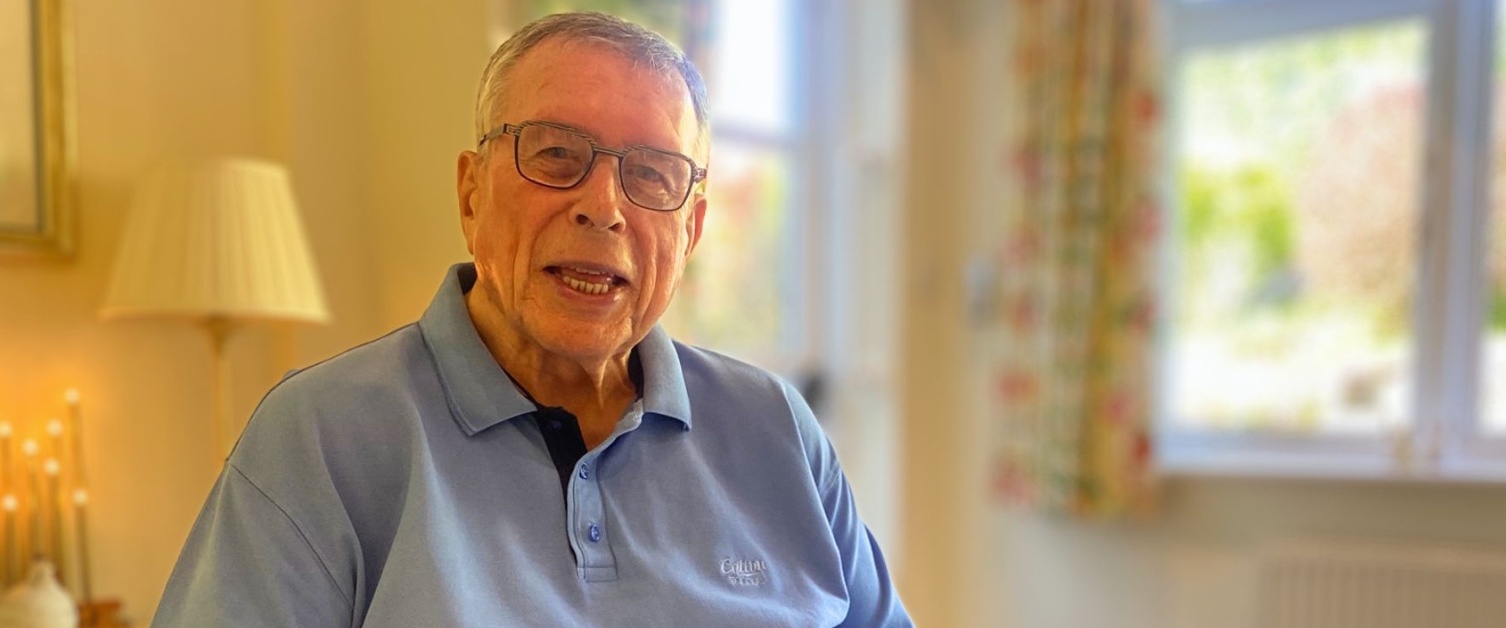
In 2014, Nigel Gibbs noticed he was having difficulty fastening his seatbelt. After having the car checked and finding nothing wrong, and with increasing difficulty bending his arm to put on his coat and jacket, he went to see his doctor.
The GP carried out some initial tests and referred Nigel, who was 68, to a consultant. Following further investigations a diagnosis of Parkinson’s was confirmed. “I wasn’t quite expecting it,” Nigel said. “I didn’t know a lot about Parkinson’s at that stage.”
One of the first things his consultant explained was that Parkinson’s affects everyone differently. Nigel, who lives in Cardiff, is one of approximately 8,600 people in Wales living with Parkinson’s, a progressive neurological condition with around 40 recognised symptoms.
Symptoms include tremor, stiffness and slowness of movement, as well as sleep disturbances, small handwriting and slurred speech. Each person experiences a combination of symptoms, and this vast variation shapes how the condition is managed.
Period of "chopping and changing"
Nigel describes the first year following his diagnosis as a period of “chopping and changing” while different combinations of medication were tried. Once an effective combination was found, the following decade was “fairly stable”. “Parkinson’s was there all the time,” he said, “but it was something I got used to dealing with.”
Before retiring, Nigel ran a flooring business and has approached Parkinson’s with a similarly methodical, business‑like mindset. “I’ve been in business all my life,” he said. “You do things step by step. First, you have to find out what it’s all about.”
Adapting to day‑to‑day challenges
One of the most valuable sources of support in the early days was hearing from others living with Parkinson’s. “They were very kind in telling me what happened to them,” he explained. “That information was very useful because it helped me understand what I was going into, what was likely to happen and what to look out for.” Having benefited from the experience of others, Nigel is happy to share his own, encouraging people to pick out anything that is relevant to their situation.
Adapting to day‑to‑day challenges has been an important part of living with Parkinson’s. Difficulty rising from chairs led him to scan rooms for chairs with arms, while, after initially resisting the idea of using a walking stick, he now see it as important. “Most of the time I’ve been fairly steady on my feet,” he said, “but it’s very important to have the stick so you can steady yourself if you get a bit wobbly. Falling over often leads to bigger problems.”
The importance of staying active
Nigel also highlights the importance of staying active. “Whether it’s walking around the house or outside, keep moving,” he said. “And keep doing things, with your hands or your brain. The more active you stay, the more the condition seems to be kept at bay.”
Medication management has also been key. “Once you find the best mix of tablets, it’s important to keep to the timetable,” he said. “Within 20 minutes to half an hour of forgetting, you know something’s wrong.” To help with this, he recommends setting alarms and using a pill organiser so that medication is ready when needed.
Over the years, Nigel has kept a diary, recording key events and handwriting samples. This has helped him notice gradual changes over time and provides a valuable record when meeting new clinicians.
"I've been extremely well looked after"
Nigel describes the Parkinson’s team based at University Hospital Llandough as “absolutely excellent”. He has accessed a wide range of support, including speech and language therapy and physiotherapy, and values being able to contact Clinical Nurse Specialists when issues arise. “You can talk from home, in a relaxed environment, about whatever’s bothering you,” he said. “I’ve been extremely well looked after.”
In conclusion he notes: “The main thing is don’t rush. Take your time. Stress and pressure upset the balance of everything, so you’ve got to take life generally easy. If everything takes longer, that’s just the way it is.”
Rydym yn croesawu galwadau ffôn yn Gymraeg, Saesneg a Iaith Arwyddion Prydain (BSL) via SignVideo.
We welcome phone calls in Welsh, English and British Sign Language (BSL) via SignVideo.