'Trust your instincts - it could save your life': Mum's melanoma warning after four-year cancer battle
17 July 2026
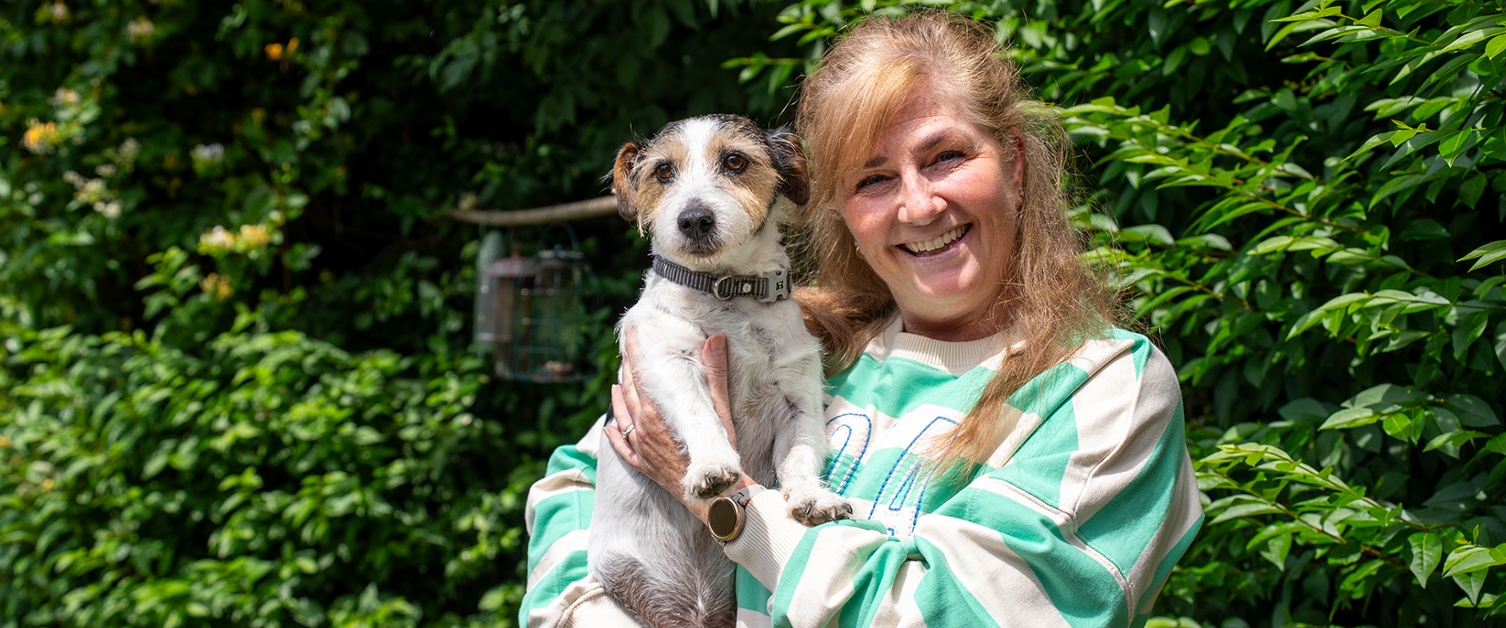
A mum-of-three who spotted the first signs of skin cancer after an itchy shoulder on a family skiing holiday is urging others to never ignore changes to their bodies.
Julie Phillips-Spurway, from Picketston, Barry, was first diagnosed with melanoma in 2022 after spotting a collection of suspicious looking moles on her back.
“After a day of skiing with my daughter, my back and right shoulder blade area felt very itchy and asked my daughter to take a look,” recalled Julie, 55.
"She took a photo and the moment I saw it, I knew something wasn't right. I went to my GP immediately after I got home.”
Julie was referred by her GP to the dermatology department at the University Hospital of Wales in Cardiff where the mole was removed and later confirmed as melanoma. Further surgery showed the cancer had been successfully removed.
"I honestly thought I’d dodged a bullet; like I’d been given a second chance," she added. "I was told everything was clear and to put it behind me."
But almost two years later, a chance radio advert changed everything.
After hearing the phrase “you're supposed to have an armpit, not an arm puff", Julie checked herself and noticed a slight swelling beneath her right arm.
Although she was reassured it could simply be a muscle strain, the lump continued to worry her.
"I couldn't shake the feeling that something wasn't right. It was tiny, but every time I looked at it, I became more convinced I needed it checked," Julie said.
Her GP referred her to the breast clinic at University Hospital Llandough where she underwent a mammogram, examination and biopsy. In April 2024, after months of tests, she received the news she had feared.
"They told me they'd found cancer cells. It felt like the world stopped."
Julie immediately cancelled plans for a month-long holiday to Thailand so she could undergo further investigations and treatment.
Scans revealed melanoma had spread to one lymph node in her right armpit. Surgeons removed 13 lymph nodes in June 2024, with just one found to contain cancer.
At the same operation, doctors also removed a mole above her right ankle that Julie had noticed had changed. Tests confirmed it too was melanoma, requiring further surgery and a skin graft.
Following the operations, Julie began preventative immunotherapy. Although initially successful, treatment had to be stopped after she developed permanent damage to her adrenal glands, leaving her dependent on lifelong hydrocortisone medication.
“I used to be a very active person and I loved jogging, but I now suffer a lot with fatigue,” she admitted.
Despite the setbacks, Julie has now received four consecutive clear scans and continues to attend dermatology appointments every three months.
Rather than dwelling on her experience, she says it has changed her outlook on life.
"We've made memories, travelled and appreciated every day," added Julie, who in recent years has become a grandmother. "Cancer is terrifying, but being told there's no evidence of disease is something I'll never take for granted."
Now she hopes others will learn from her story.
"If you notice something different, however small it seems, don't ignore it and don't let anyone talk you out of getting it checked. You know your own body better than anyone. Catching melanoma early can save your life. Delaying could cost it."
Julie also praised the care she received throughout her treatment, thanking the teams at the University Hospital of Wales and Velindre Cancer Centre for the support they gave her during her cancer journey.
About skin cancer (melanoma)
Melanoma is one of the most serious and common types of skin cancer. While it can be life-threatening, it is often much easier to treat when detected early. Knowing what to look for and checking your skin regularly can make a real difference.
Skin cancer can develop without causing pain or obvious symptoms at first. That’s why it’s important to become familiar with your skin and notice any changes as early as possible.
How to check your skin
Taking a few minutes each month to examine your skin can help you spot anything unusual. This includes checking existing moles as well as looking out for new marks or patches.
Consultant Dermatologist, Dr Faraz Ali, recommends using the ABCDE guide as a simple way to assess moles:
- A – Asymmetry: One half of the mole looks different from the other
- B – Border: The edges are irregular, uneven or blurred
- C – Colour: There is more than one colour within the same mole
- D – Diameter: The mole is larger than 6mm (about the size of a pencil eraser)
- E – Evolution: There are changes in size, shape or colour over time
When to seek advice
If you notice any of the signs above, or anything that doesn’t look or feel right, it’s important to get it checked. This might include a new mole, a mole that has changed, or any area of skin that looks unusual.
Contact your GP as soon as possible if you have any concerns.
Checking your skin regularly is a simple step you can take to protect your health. Early recognition of potential signs of melanoma could save your life.
Rydym yn croesawu galwadau ffôn yn Gymraeg, Saesneg a Iaith Arwyddion Prydain (BSL) via SignVideo.
We welcome phone calls in Welsh, English and British Sign Language (BSL) via SignVideo.