Therapists swap cars for e-bikes to visit patients across Cardiff
Monday 10th August 2026
A team of therapists from Cardiff and Vale University Health Board are testing out a different mode of transport to visit patients this summer.
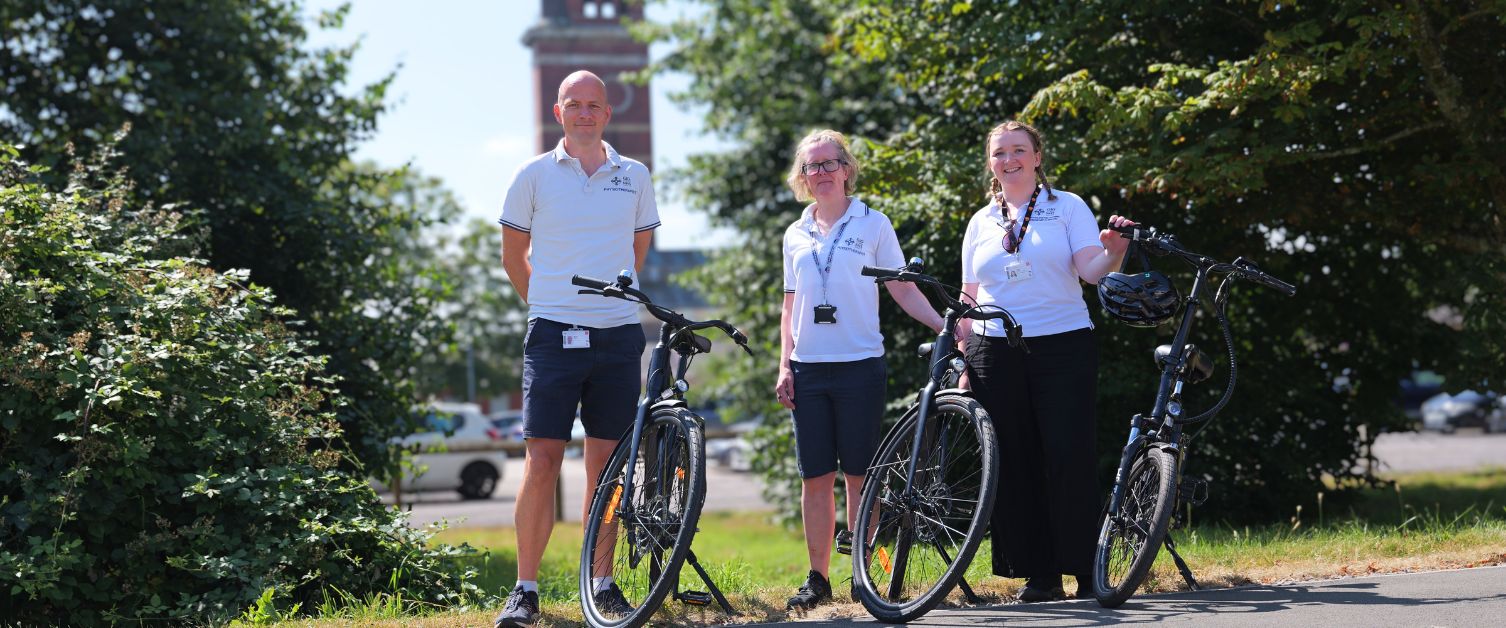
Four Physiotherapists and a Speech and Language Therapist from the Cardiff Community Resource Team, have swapped their cars for electric bikes as part of a pilot study, testing whether cycling could be a viable alternative to driving.
The Cardiff Community Resource Team is a joint health and social care service that supports people in their own homes, helping them regain independence through rehabilitation, to enable hospital discharge and avoid unnecessary hospital admission.
After hearing about clinicians using electric bikes at Royal Devon NHS, Physiotherapist Andrew Pratt asked: "Why not here?" The idea for the e-bike trial was developed by a small group looking at how the service can meet its environmental goals, alongside support from the Public Health Team.
Working with Specialty Registrar in Public Health Medicine, Saqif Mustafa and Deputy Head of Operations for Integrated Community Care Services Lloyd Waygood, the team navigated practical considerations and the three-month pilot launched at the end of May. Based at the former Whitchurch Hospital site, the team leased five electric bikes, using funding from the Cardiff and Vale Public Health Team.
“It’s an old idea,” Andrew admits referring to clinicians travelling by bike, “but there are so many reasons why it is a good idea.”
“Over the first two months of the pilot, as a team of five of us, we've collectively cycled over 300 miles. On average our journeys to patients are just over 2 miles and the average journey time hasn't been that different to driving. By bike, we can use routes that mean we aren’t sat in traffic jams getting frustrated, and we don’t struggle to park at the other end.”
“It started off as a sustainability project,” said Andrew, “but actually we have found there are lots of other benefits from cycling as well, both in terms of staff well-being and promoting healthy lifestyles to patients.”
"Patient feedback has been really positive on the whole," said Andrew. "We carry flyers from Pedal Power and, if people show an interest in cycling, we can promote the opportunities and support available."
The team deliberately chose electric bikes to make cycling a realistic option for as many staff as possible.
“It made it a more equitable option,” said Andrew. “It allows us to cover a larger distance around Cardiff and not arrive at the visits as fatigued as we might otherwise be.”
There have been some limitations, that have required workarounds. Team members currently have to store and charge the bikes at home, and there are no changing facilities.
While final results are still to be evaluated, the team has travelled more than 300 miles by bike, reducing car journeys and engaged patients in conversations around exercise and active travel.
Saqif said: “Benefits to health and the places we live in often start with rethinking everyday choices. What makes initiatives like this so exciting is that the benefits compound. Staff are more active during the working day, patients are exposed to positive conversations about movement and active travel, fewer avoidable car journeys can help improve local air quality, and care is provided closer to communities, easing pressure on hospitals. All of this contributes to a more sustainable NHS.
"If we can build active travel into the way we live and work, the benefits will be felt across Cardiff and the Vale for years to come.”
Rydym yn croesawu galwadau ffôn yn Gymraeg, Saesneg a Iaith Arwyddion Prydain (BSL) via SignVideo.
We welcome phone calls in Welsh, English and British Sign Language (BSL) via SignVideo.