Meet the Team Supporting Endometriosis Care in Cardiff and Vale
3 March 2026
Endometriosis affects one in ten women in Wales, yet the disease is still largely misunderstood. Far from being ‘just a bad period’, it is a chronic and often debilitating condition that has a huge impact on daily life.
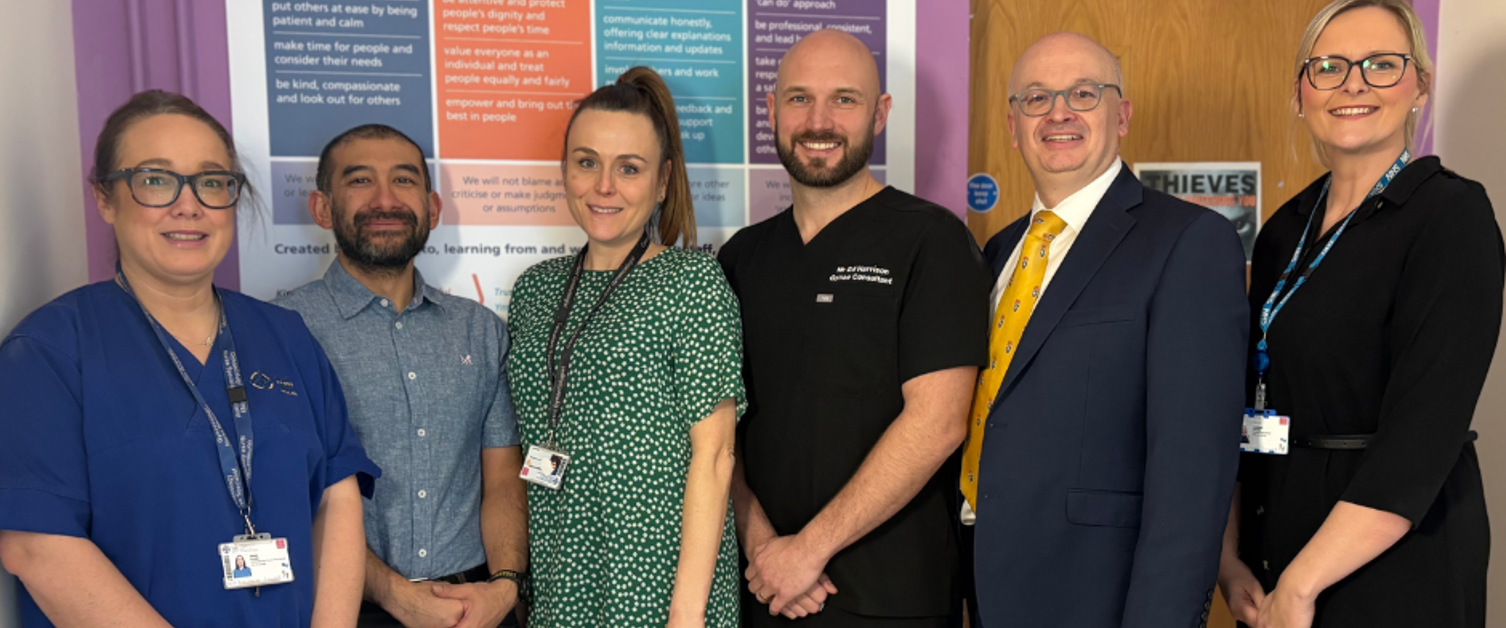
To mark Endometriosis Awareness Week, we spoke to the team who specialise in Endometriosis care at Cardiff and Vale University Health Board.
What is endometriosis?
“Endometriosis is a very common condition that affects women and those assigned female at birth” says Gynaecology Consultant Mr Lutfi Shamsuddin. “It affects people who have started their periods usually up until the menopause, although a small number of people can be affected after menopause. The disease varies widely in presentation and affects different people in different ways.”
Clinical Nurse Specialist for Endometriosis and Pelvic Pain Ms Helen Evans adds, with endometriosis, tissue similar to the lining of the womb grows outside the uterus. It can be found in the pelvis, bladder, bowel, and even, in rare cases, the lungs.”
What are the symptoms to look out for and how is it diagnosed?
“Symptoms to look out for are really heavy, painful periods, chronic pelvic pain (during a period and outside of your normal cycle), for some people there’s also irregular bleeding and pain during or after sex” says Helen.
“To diagnose endometriosis, we start by understanding the patient’s history through detailed discussion of symptoms. We’d then examine the abdomen and pelvis,” explains Lutfi.
“Further investigations can include ultrasound scans and MRIs, although these don’t always detect the condition. In some cases, we use diagnostic laparoscopy (keyhole surgery) to confirm it. This involves a camera inserted through the belly button to view internal organs and identify tissue growth.”
How can endometriosis be managed?
“Unfortunately, there is no current cure for endometriosis, but we do have multiple strategies for managing the condition” says Gynaecology Consultant Ms Angharad Jones. “It’s a lifetime condition that can impact at different stages of a patient’s life, so individuals may have to chop and change what treatment strategies they have throughout their journey.”
Consultant Gynaecologist Obstetrician Mr Anthony Griffiths explains the different treatment options for Endometriosis, “the treatment of endometriosis symptoms can be split it into four groups; conservative, non-hormonal, hormonal and surgical.”
“Conservative involves watching and observing the disease, monitoring how symptoms progress over time.
“Non-hormonal treatments can involve active pain relief medication, but also other capacities and therapies which can help to manage pain. This could mean working with anaesthetic colleagues who can support with nerve blocks and anaesthetic patches or working with physiotherapists and dieticians to help manage symptoms.
“Hormonal therapies can include hormonal contraceptives and licensed hormonal treatments. These are really changing the landscape of endometriosis care. Many hormonal treatments are available in Primary Care, so it’s really important to seek support from your GP in the first instance.”
“Surgical treatments involve Laparoscopic surgery (keyhole surgery), where we can cut out the endometriosis tissue under general anaesthetic.”
Gynaecology Consultant Mr Edward Harrison says, “I think what’s really important for the management of endometriosis is that we think holistically. Alongside medical treatment, approaches like pelvic floor physiotherapy, anti-inflammatory diets, and psychosexual therapy can all really help improve quality of life for our patients.”
What would you like the public to know about endometriosis?
“There is a lot of hard work going on behind the scenes with endometriosis care. For so long women’s health has been put on the back burner but there is so much work going on now to push the boundaries with what we can do for patients with endometriosis” says Angharad.
“Not only healthcare teams but support groups also work tirelessly to help patients cope and charities are working hard to push research agendas. There is also so much support you can access online if you’re struggling and need support.”
While there is still lots of work to do, growing awareness and improved care is helping to change the future for those living with endometriosis.
Some useful resources for endometriosis support:
Rydym yn croesawu galwadau ffôn yn Gymraeg, Saesneg a Iaith Arwyddion Prydain (BSL) via SignVideo.
We welcome phone calls in Welsh, English and British Sign Language (BSL) via SignVideo.