Nigel - 'I am hopeful for a life that is not planned around my condition'
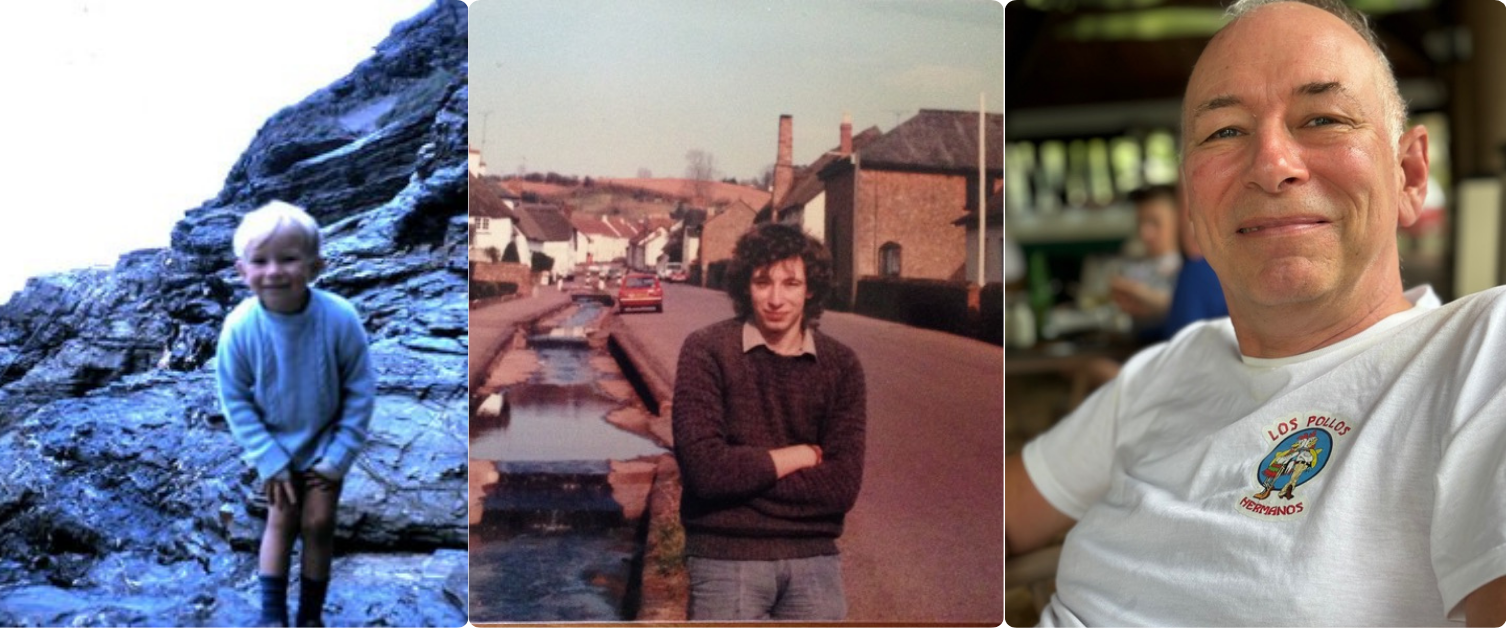
On the week of his 61st birthday, Nigel Miller visited the Cardiff Haemophilia Centre at the University Hospital of Wales to be treated with Hemgenix (etranacogene dezaparvovec), a new gene therapy prescribed for the effective treatment of haemophilia B.
The new treatment marks the end of years of weekly injections for Nigel, and a life scheduled around visits to hospitals for unplanned bleeds and damage to his joints.
Nigel, who lives in Carmarthenshire, was diagnosed with haemophilia B when he was just eleven months old. As a baby, he once banged his mouth on the bars of his cot, and as the wound wouldn’t stop bleeding, Nigel’s parents knew they had to take him to see a doctor.
As a child, Nigel’s condition was treated with fresh frozen plasma, a time-consuming process which required him to be on a drip for between four and eight days at a time, usually twice a month. Then, at the age of twelve, a newer treatment via injection, known as concentrated factor IX, became available. This is an infusion which replicates the clotting factor that those with haemophilia cannot produce.
“I started doing these injections myself at home about twice a month from the age of fourteen whenever I had a bleed.”
Until now, these injections have remained the only treatment option available and have limited the number of times Nigel has had to visit a hospital, yet his condition has continued to remain at the forefront of his mind.
“It shapes every decision, every plan, and every ordinary day of my life. From the outside, it can look normal. On the inside, it is measured in risk, caution, pain, and what others might think of as resilience.”
The new treatment, Hemgenix, introduces the gene responsible for producing clotting factor IX via the liver, preventing excessive bleeds on a permanent basis and freeing Nigel from weekly treatment.
“This is not a cure in the traditional sense, but it means I don’t have to inject myself weekly anymore. Instead of repeatedly replacing the missing clotting factor, gene therapy gives my body the instructions it has always lacked — enabling it to produce factor IX itself.”
Despite his condition and the limitations this has placed on his day-to-day life, Nigel recognises that it has encouraged him to view his circumstances with greater appreciation and pursue his aspirations with even more vigour.
This new form of treatment, however, has given him the promise of a life not entirely governed by the management of his condition.
“I am hopeful — not for perfection, but for freedom from constant injections, fewer, if any, bleeds, less joint damage, and a life that is not planned around my condition. I imagine a future where haemophilia is something I can manage in the background.”
He remains cautiously optimistic, however, and acknowledges the significance of being the first person in Wales to receive this life-changing therapy.
“Most of all, I feel proud — proud of how far treatment has come, proud of the clinicians and researchers who made this possible, and proud to stand at a moment where living with severe haemophilia B may finally begin to look very different.
“This is not just a personal milestone. It is a glimpse of a future where inherited conditions like mine no longer define the limits of a life.”
Rydym yn croesawu galwadau ffôn yn Gymraeg, Saesneg a Iaith Arwyddion Prydain (BSL) via SignVideo.
We welcome phone calls in Welsh, English and British Sign Language (BSL) via SignVideo.