Glodi: "I couldn't swallow, eat or drink - then everything changed"
4th June 2026
Glodi should have been sitting his A-levels like any other teenager.
Instead, he was in hospital, unable to eat or drink safely, struggling even to manage his own saliva. Following a virus that led to him becoming seriously ill, Glodi was found to have severe swallowing difficulties (dysphagia) and the impact was profound.
Dysphagia can significantly affect comfort, dignity and recovery, and without effective management, increases the risk of serious complications such as chest infections and requiring a feeding tube.
Swallowing is something most people never think about, but for Glodi it became the biggest challenge of his recovery.
One of the youngest patients to receive the therapy
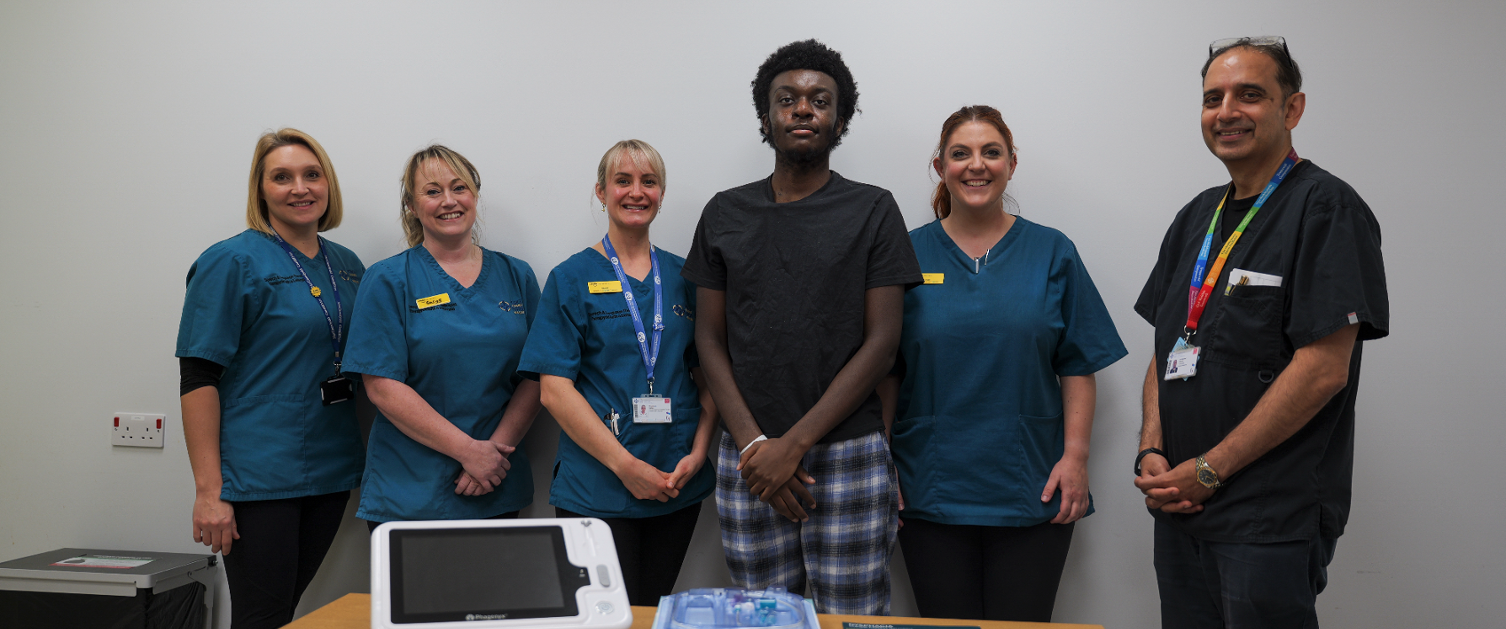
As part of a service development project with the Adult Speech and Language Therapy Team, Glodi was offered pharyngeal electrical stimulation (PES), delivered using the Phagenyx System
The therapy is designed to support recovery of swallowing by gently stimulating nerves in the throat using small, controlled electrical pulses delivered via a catheter.
Glodi is one of the youngest patients ever to receive this particular therapy and the decision to use PES was made under SLT specialist clinical judgement, based on Glodi’s swallowing presentation and rehabilitation needs. The Speech and Language Therapy (SLT) team worked closely with him to assess his swallowing function and support his recovery, including repeated swallowing assessments and imaging to track progress and inform ongoing clinical decisions.
Treatment sessions were short, around 10 minutes, and tailored to his individual needs.
An unusually fast recovery
What followed exceeded expectations.
Following treatment and reassessment, Glodi was able to return to eating and drinking safely within two weeks, a pace of recovery not typically seen in routine stroke rehabilitation.
Clinicians involved in Glodi’s care described his improvement as unusually fast with the speed and extent of recovery demonstrating the potential impact of PES within specialist SLT practise.
“Within a very short period, his swallowing had improved completely,” said Dr Shakeel Ahmed, Consultant Stroke Physician. “In my professional career, I have never seen anyone improve as quickly as this.”
Sarah Appleton, Glodi’s Speech and Language Therapist, echoed Dr Ahmed’s comments: “Having seen Glodi go from nil-by-mouth and not be able to eat or drink or manage his own saliva, to be back onto a normal diet and fluid within two weeks – that's not a recovery we’re used to. It has been outstanding to see the progress he’s made.”
“It gave me my independence back”
Beyond the clinical outcomes, the therapy has impacted Glodi’s quality of life. Regaining the ability to eat and drink independently restored autonomy, confidence and a sense of normality — milestones that are central to holistic meaningful recovery.
For Glodi, being able to swallow again was about far more than clinical progress.
The moment he was told it was safe to eat again felt like a turning point. Simple things that most people never think twice about, sitting down for a meal, choosing what to eat, sharing food with others suddenly mattered more than ever.
“Being able to eat and drink again gave me my independence back,” he said. “It changed everything.”
That first meal wasn’t just food. It was a sign that life was moving forward again.
Now, Glodi is focused on rebuilding his confidence and looking ahead. He’s thinking about getting back to normal routines, spending time with friends, and planning for the future, things that not long ago, felt uncertain.
“I’m incredibly grateful,” he said. “I wouldn’t be where I am without them.”
Service development and next steps
Following this and other inpatient cases treated as part of the trial, CAVUHB has approved the use of PES within its SLT inpatient services under appropriate clinical governance arrangements. This marks a significant development in the delivery of evidence-informed, innovative dysphagia management, within the Health Board.
The successful implementation by the SLT team demonstrates the value of embracing innovation and always seeking new therapy options.
By combining specialist expertise, careful patient selection and robust assessment, alongside support from the health board to fund the equipment, PES will now be offered to suitable patients presenting with a new neurogenic dysphagia, in inpatient settings at both University Hospital Wales and University Hospital Llandough.
The team hope that patient stories like Glodi’s will continue to inform service development and contribute to the growing evidence base around innovative therapies.
Watch Glodi’s story
Rydym yn croesawu galwadau ffôn yn Gymraeg, Saesneg a Iaith Arwyddion Prydain (BSL) via SignVideo.
We welcome phone calls in Welsh, English and British Sign Language (BSL) via SignVideo.