Creating Space for Healing: Art Therapy's Role in Stroke Rehabilitation
14th May 2026
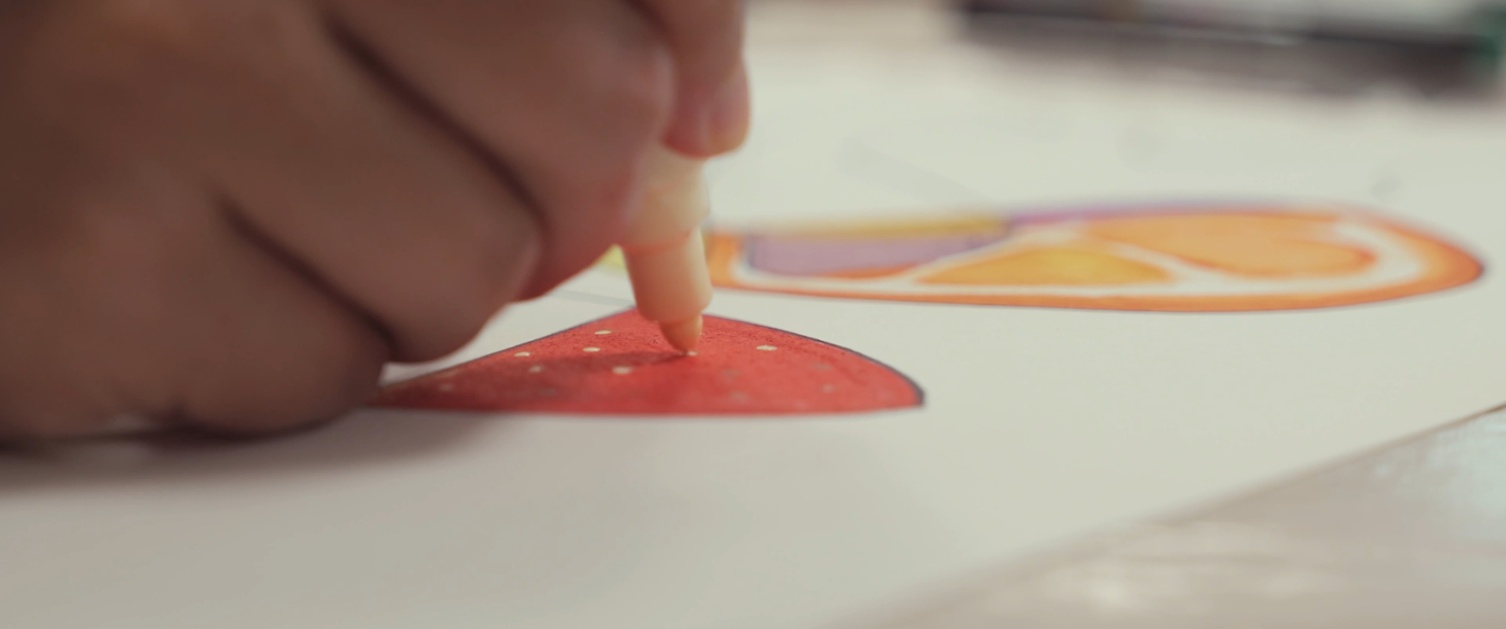
Every Thursday morning, patients within the Stroke Rehabilitation unit are invited to take part in an art therapy session – a place to create, be grounded and reclaim peace.
Esther Lewis, a trainee art psychotherapist, is on placement within the unit based at University Hospital Llandough. She is doing a master's degree in Art Psychotherapy and established the sessions in November 2025 for patients who have experienced a stroke.
Art therapy is not an art class but is instead a chance to explore one’s feelings through the act of creation. It is an opportunity for patients to come and be together to express themselves and how they are feeling in a creative way.
There is no requirement to be good at art or to develop skills, but only to process emotions and aid wellbeing.
“I think art is so important for mental health,” Esther said about this type of therapy. “It gives you a chance to slow the brain down and process your emotions and what you’re going through.”
Finding healing through creative expression
Esther has led patients within the stroke rehabilitation unit through creative projects such as mindful doodling, collage and painting. One project was based on kintsugi, a way of repairing ceramics with gold, and understanding breaking and repair as part of something’s history.
“I thought this would be a good art practice to show to the group,” said Esther. “Stroke survivors may have changed how they go about their lives since their stroke but there can be beauty in their healing journey and how life looks going forward.”
Stella, a chartered architect, told us about her experience within the unit over the last 16 weeks after a severe stroke that nearly took her life.
Inspired by the mural of wings within the stroke rehabilitation unit, Stella had drawn a cloak that Esther had suggested physically bringing to life.
“I wanted to give it to my son for Christmas,” she explained. “I lost my husband three years ago and he’s my only child.”
The cape represented what Stella felt while in the unit – that her son was a prince.
“He took all my responsibilities from me while I recovered. He sat with me even when I was against the odds and nearly died. I wanted to reflect how much that meant to me.”
Together, Esther and Stella formed a plan to create the cloak out of paper to give it to Stella’s son in time for Christmas.
“He was very appreciative,” she added.
In an environment where patients are recovering in bed for much of the week, the session is something to look forward to.
“There’s a quiet voice from the colleagues who encourage us to talk about our experiences here and what we’re drawing. It’s been very helpful,” Stella said.
Through taking the time to create and express themselves in a calm environment, people are able to reflect on how they feel, how their lives have changed and what life will be like going forward.
“It’s something that could be very useful throughout the hospital to help people process what they’re going through while they’re here,” Esther said with pride about her work.
“If we had more of it in the healthcare system that would be brilliant.”
Signs of a Stroke
A stroke happens when the blood supply to part of the brain is cut off and is considered a medical emergency.
The FAST acronym helps you to recognise the most common signs of a stroke and reminds you what to do when stroke strikes.
- Face - one side of the face may droop, and it might be hard to smile
- Arm – they may have arm weakness or numbness and may not be able to fully lift both arms and keep them there
- Speech – speech may be slurred or they may sound confuse
- Time – the most important thing to do when you recognise the signs of a stroke is to call 999 immediately.
Rydym yn croesawu galwadau ffôn yn Gymraeg, Saesneg a Iaith Arwyddion Prydain (BSL) via SignVideo.
We welcome phone calls in Welsh, English and British Sign Language (BSL) via SignVideo.